

-
-
ꁇHome Decoration Main Materials
-
ꁇCommercial Decoration Main Materials
-
ꁇGeneral Auxiliary Materials
-
ꁇHardware & Fittings
-
ꁇLighting & Electrical
-
ꁇDoors & Windows
-
ꁇSoft Decoration & Home Products
-
ꁇTools & Equipment
-
ꁇSpecial Engineering Materials
-
ꁇCustomer Service
-
ꁇSpecial Zones
-
Roofing Shingles for GCC Projects: How to Cut Replacement Cycles and Lower Lifetime Costs
Why Standard Shingles Fail in the GCC — And What It Costs You
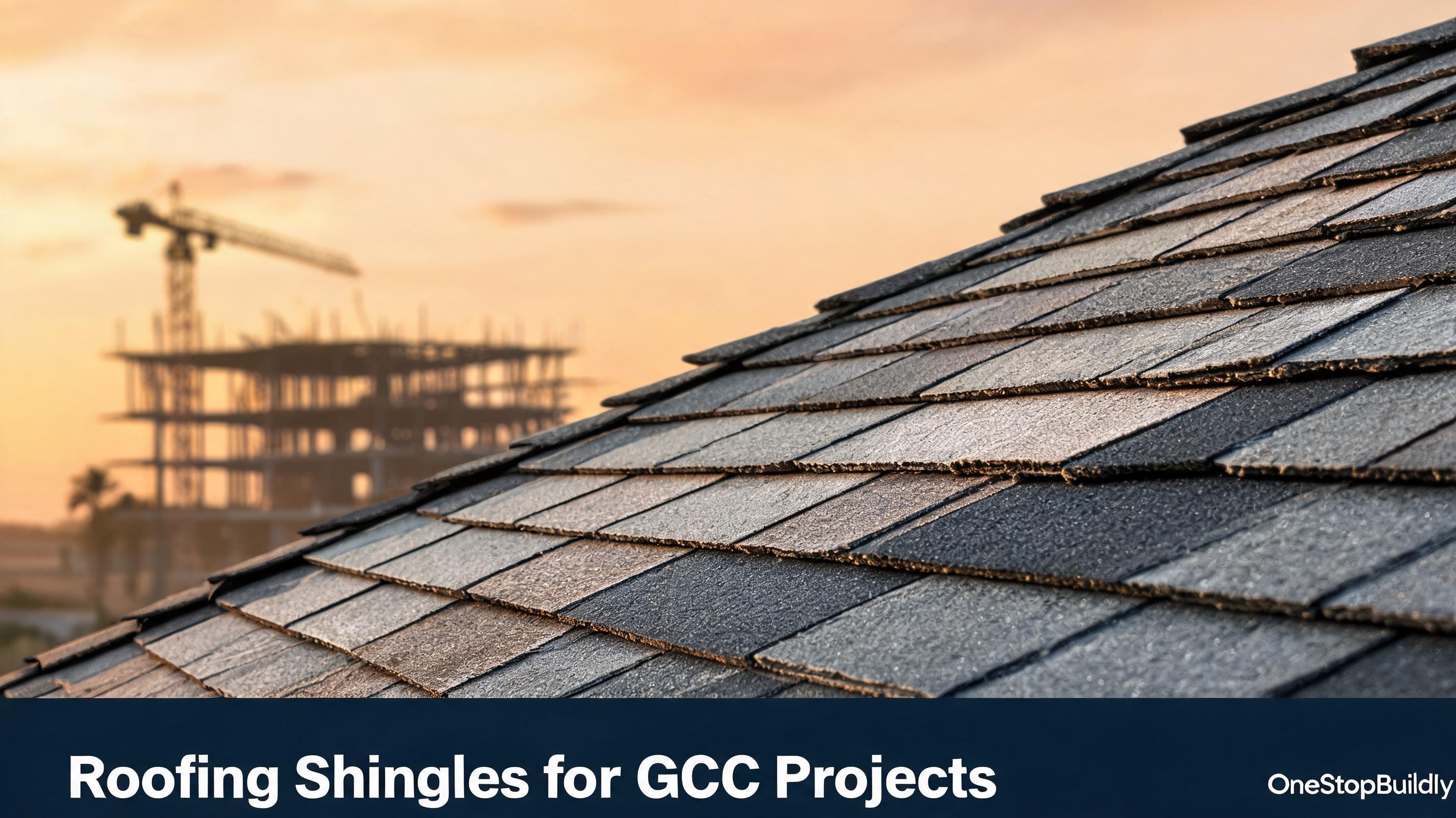
You know the problem: a roofing system that fails in year seven when your project warranty runs for ten. In GCC markets, where surface temperatures routinely exceed 70°C, roofing failures are not rare exceptions — they are predictable outcomes of choosing the wrong material.
Most asphalt shingles on the market are tested for North American or European climate profiles. They perform reasonably well in temperate zones. Put them on a rooftop in Riyadh or Dubai, and the story changes fast.
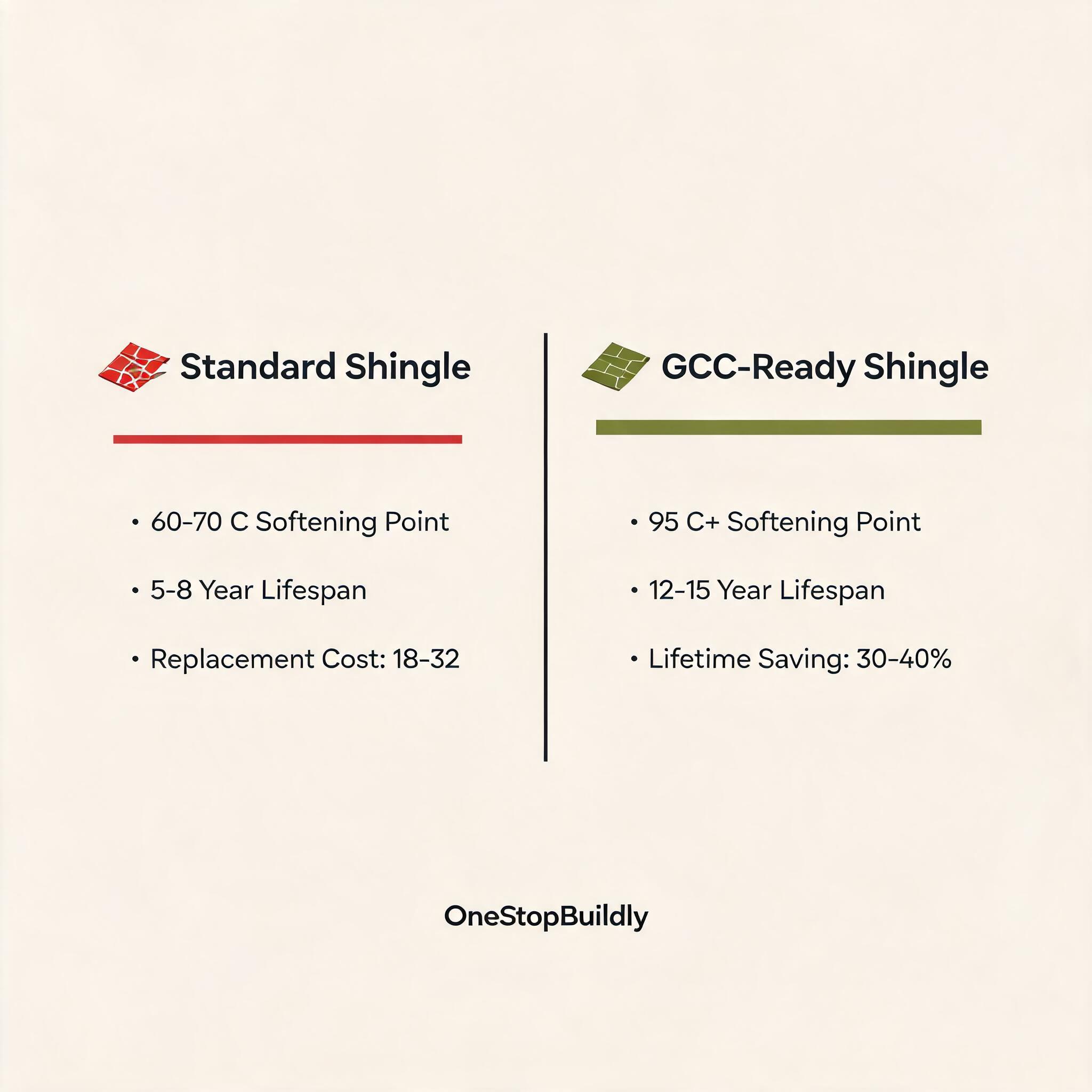
GCC rooftop surface temperatures average 65–75°C during summer months. Standard shingles begin to soften at approximately 60°C. When shingles soften, granule loss accelerates. When granules are gone, the asphalt layer is exposed to direct UV radiation. At that point, degradation compounds monthly — cracks form, water seeps in, and the underlayment fails.
A 10,000-square-meter commercial roof in the GCC typically faces replacement between years five and eight when standard shingles are used. Each premature replacement costs $18–$32 per square meter in materials, labor, and project downtime. For a mid-size project, that is a $180,000–$320,000 unplanned expense — one that hits long after your original budget closed. The real cost is not the shingle price per square meter. It is the replacement cycle.
What Makes a Shingle GCC-Ready: Four Specifications That Matter
Not all shingles are created equal for high-temperature environments. When you evaluate products for a GCC project, focus on these four specifications before anything else.
1. Softening Point Above 95°C
The softening point — measured by the ASTM D36 ring-and-ball test — is the single most important number for GCC applications. Standard shingles soften around 60–70°C. Roofing-grade modified bitumen shingles with SBS (styrene-butadiene-styrene) polymer additives push this number above 95°C. That margin of safety is what prevents summer deformation. When comparing supplier data sheets, make the softening point your first filter. If it is below 90°C, move on.
2. Solar Reflectance Index Above 29
The Solar Reflectance Index combines reflectivity and thermal emittance into a single value. Shingles with SRI above 29 qualify as "cool roofing" materials under LEED v4.1 and most GCC green building codes. Higher SRI means less heat absorption, lower roof deck temperatures, and measurable reductions in building cooling load — typically 10–15%. For a warehouse or logistics facility running air conditioning 24/7 during summer, that difference translates directly to operating cost savings.
3. Wind Uplift Resistance: ASTM D7158 Class H
GCC coastal zones — Dubai, Doha, Jeddah, Muscat — experience seasonal high winds and occasional sandstorms. Class H wind resistance under ASTM D7158 is the minimum you should accept for these locations. Shingles rated below Class H risk edge lifting and water ingress during storm conditions, which compromises the entire roofing assembly.
4. SASO / GSO Compliance Documentation
If your project is in Saudi Arabia, every imported roofing product must carry SASO certification. In the UAE, ESMA conformity is required. Suppliers who cannot produce these certificates on demand will cause customs delays of two to four weeks — and in some cases, outright rejection of the shipment. Pre-qualify every supplier by requesting their GCC compliance documentation before you sign a purchase order.
How to Source Smarter: Three Procurement Rules That Lower Your Total Cost
Choosing the right shingle specification solves the performance problem. How you source it solves the cost problem. These three procurement rules come from our experience supplying roofing materials to GCC projects in Riyadh and Dubai.
Rule One: Negotiate on Lifecycle Cost, Not Per-Square-Meter Price
A shingle that costs $4.50/m² and lasts eight years is more expensive than one at $5.80/m² that lasts fifteen years. The math is straightforward but often ignored in the rush to meet budget targets. When you present a supplier comparison to your project stakeholders, include the 15-year cost projection alongside the upfront price. That single column transforms the conversation.
Rule Two: Combine Roofing, Underlayment, and Flashing in One Purchase Order
Fragmented sourcing — shingles from one factory, underlayment from another, flashing from a third — creates three customs entries, three shipments to track, and three points of potential delay. Consolidated sourcing reduces landed cost per unit by an estimated 18–22% through full-container utilization and single-customs clearance. For a typical commercial roofing project, that consolidation saving alone is $8,000–$15,000.
Rule Three: Time Your Order for the Pre-Summer Production Window
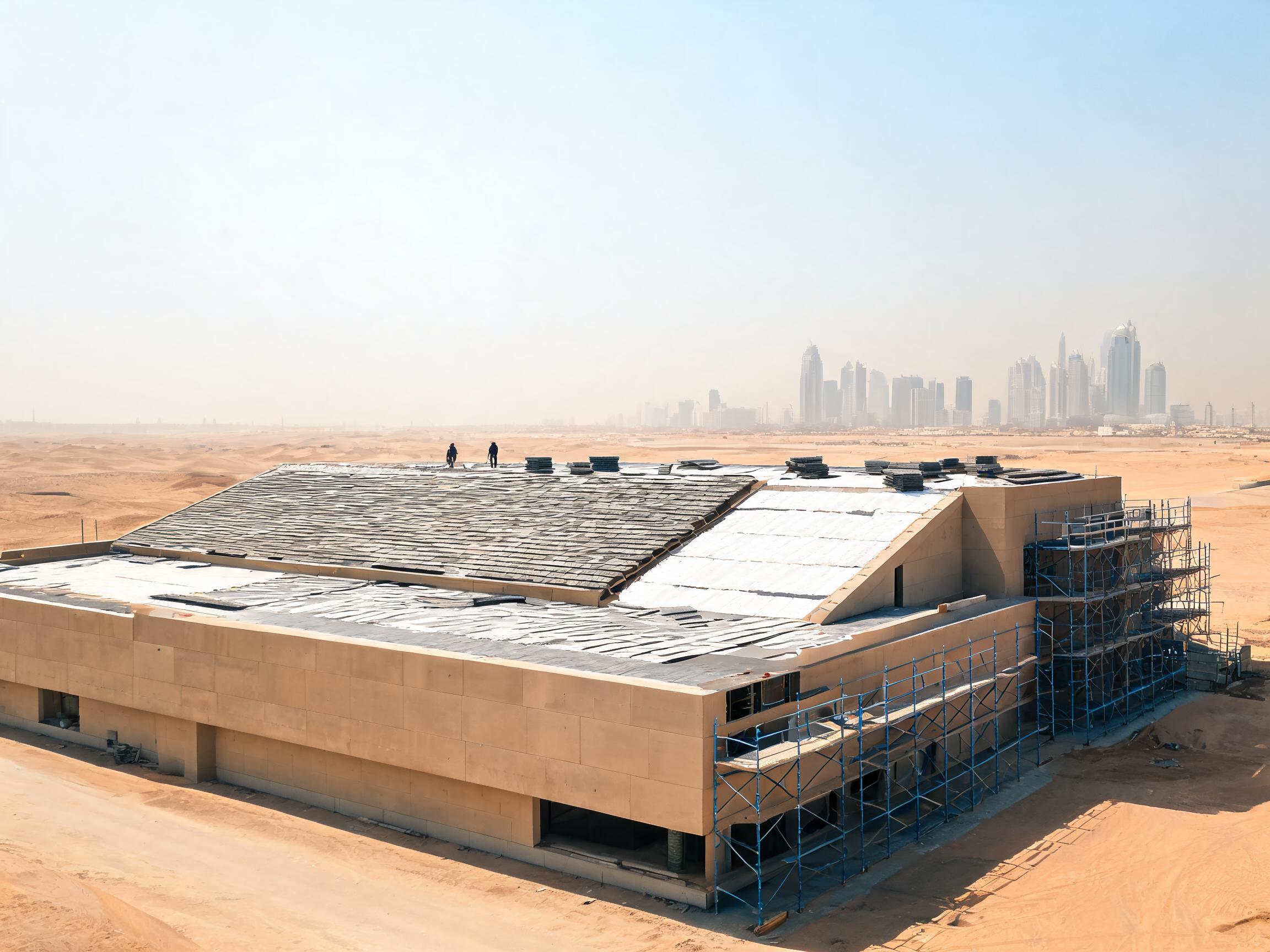
Chinese factories manufacturing roofing materials for GCC export typically run at lower capacity between November and February. Ordering during this window yields faster production turnaround, more attentive quality control, and in many cases a 3–5% price advantage compared to peak-season orders placed in April or May. You want your shipment to arrive at GCC ports before the summer construction slowdown begins — plan backward from that arrival date to determine your order window.
In our Riyadh bulk supply project, we pre-qualified all 14 supplying factories for SASO compliance before the first purchase order was issued. When material arrived at Jebel Ali port, clearance took three days instead of the two-to-three weeks that non-certified shipments routinely face.
GCC Roofing Quick Reference — June 2026
Minimum softening point: 95°C (ASTM D36). Target SRI: above 29. Wind resistance: ASTM D7158 Class H. Required certifications: SASO / ESMA / GSO compliance. Estimated consolidation savings: $8,000–$15,000 per mid-size project. Smartest order window: November–February for best pricing and QC attention.
Partner With OneStopBuildly for Your Next GCC Roofing Project
We supply SASO-compliant roofing shingles, underlayment, and flashing systems to contractors and developers across the GCC. Our consolidated sourcing model — one partner, one order, one shipment — is built for the compliance demands and climate realities of Middle Eastern construction.
Send your project specifications to cindy@onestopbuildly.com. We will return a preliminary sourcing proposal with pricing, delivery timeline, and GCC compliance documentation within 48 hours.


